JS继承

前言

JS有好几种继承方式,常见的就是原型链继承和call改变指向

先看原型链是怎么回事,一图胜千言
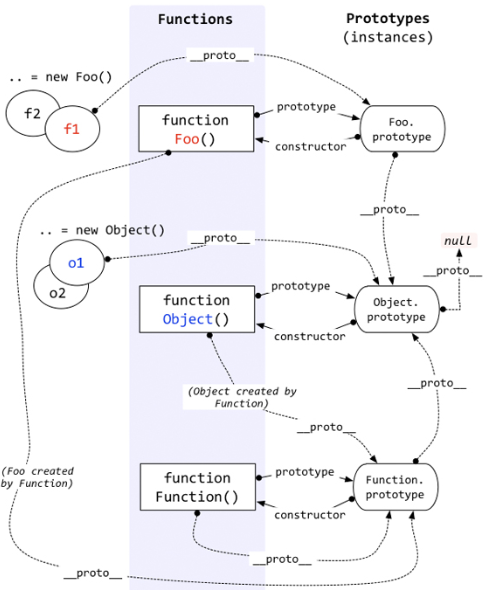
JS原型链

ES5的寄生组合继承

1
2
3
4
5
6
7
8
9
10
11
12
13
14
15
16
17
18
19
20
21
function parent (age) {
this.age = age
}

parent.prototype.say = function () {
console.log(this.age)
}

function sub (age, value) {
parent.call(this, age)
this.value = value
}

sub.prototype = Object.create(parent.prototype, {
constructor: {
value: sub,
enumerable: false,
writable: true,
configurable: true
}
})

class继承

1
2
3
4
5
6
7
8
9
10
//  转换前
class Parent {
constructor(name,age){
this.name = name;
this.age = age;
}
speakSomething(){
console.log("I can speek chinese");
}
}
1
2
3
4
5
6
7
8
9
10
11
12
13
14
15
16
17
18
19
20
21
22
23
24
25
26
27
28
29
30
31
32
33
34
35
36
37
38
39
40
41
42
43
44
//  转换后
"use strict";

var _createClass = function () {
function defineProperties(target, props) {
for (var i = 0; i < props.length; i++) {
var descriptor = props[i];
descriptor.enumerable = descriptor.enumerable || false;
descriptor.configurable = true;
if ("value" in descriptor) descriptor.writable = true;
Object.defineProperty(target, descriptor.key, descriptor);
}
}

return function (Constructor, protoProps, staticProps) {
if (protoProps) defineProperties(Constructor.prototype, protoProps);
if (staticProps) defineProperties(Constructor, staticProps);
return Constructor;
};
}();

function _classCallCheck(instance, Constructor) {
if (!(instance instanceof Constructor)) {
throw new TypeError("Cannot call a class as a function");
}
}

var Parent = function () {
function Parent(name, age) {
_classCallCheck(this, Parent);

this.name = name;
this.age = age;
}

_createClass(Parent, [{
key: "speakSomething",
value: function speakSomething() {
console.log("I can speek chinese");
}
}]);

return Parent;
}();

class extend原理

1
2
3
4
5
6
7
8
9
10
11
12
13
14
15
16
17
18
19
20
21
22
23
24
25
26
27
//  转换前
class Parent {
static height = 12
constructor(name,age){
this.name = name;
this.age = age;
}
speakSomething(){
console.log("I can speek chinese");
}
}
Parent.prototype.color = 'yellow'


//定义子类,继承父类
class Child extends Parent {
static width = 18
constructor(name,age){
super(name,age);
}
coding(){
console.log("I can code JS");
}
}

var c = new Child("job",30);
c.coding()
1
2
3
4
5
6
7
8
9
10
11
12
13
14
15
16
17
18
19
20
21
22
23
24
25
26
27
28
29
30
31
32
33
34
35
36
37
38
39
40
41
42
43
44
45
46
47
48
49
50
51
52
53
54
55
56
57
58
59
60
61
62
63
64
65
66
67
68
69
70
71
72
73
74
75
76
77
78
79
80
81
82
83
84
85
86
87
88
89
90
91
92
93
94
95
96
97
//  转换后
"use strict";

var _createClass = function () {
function defineProperties(target, props) {
for (var i = 0; i < props.length; i++) {
var descriptor = props[i];
descriptor.enumerable = descriptor.enumerable || false;
descriptor.configurable = true;
if ("value" in descriptor) descriptor.writable = true;
Object.defineProperty(target, descriptor.key, descriptor);
}
}

return function (Constructor, protoProps, staticProps) {
if (protoProps) defineProperties(Constructor.prototype, protoProps);
if (staticProps) defineProperties(Constructor, staticProps);
return Constructor;
};
}();

function _possibleConstructorReturn(self, call) {
if (!self) {
throw new ReferenceError("this hasn't been initialised - super() hasn't been called");
}
return call && (typeof call === "object" || typeof call === "function") ? call : self;
}

function _inherits(subClass, superClass) {
if (typeof superClass !== "function" && superClass !== null) {
throw new TypeError("Super expression must either be null or a function, not " + typeof superClass);
}
subClass.prototype = Object.create(superClass && superClass.prototype, {
constructor: {
value: subClass,
enumerable: false,
writable: true,
configurable: true
}
});
if (superClass) Object.setPrototypeOf ? Object.setPrototypeOf(subClass, superClass) : subClass.__proto__ = superClass;
}

function _classCallCheck(instance, Constructor) {
if (!(instance instanceof Constructor)) {
throw new TypeError("Cannot call a class as a function");
}
}

var Parent = function () {
function Parent(name, age) {
_classCallCheck(this, Parent);

this.name = name;
this.age = age;
}

_createClass(Parent, [{
key: "speakSomething",
value: function speakSomething() {
console.log("I can speek chinese");
}
}]);

return Parent;
}();

Parent.height = 12;

Parent.prototype.color = 'yellow';

//定义子类,继承父类

var Child = function (_Parent) {
_inherits(Child, _Parent);

function Child(name, age) {
_classCallCheck(this, Child);

return _possibleConstructorReturn(this, (Child.__proto__ || Object.getPrototypeOf(Child)).call(this, name, age));
}

_createClass(Child, [{
key: "coding",
value: function coding() {
console.log("I can code JS");
}
}]);

return Child;
}(Parent);

Child.width = 18;


var c = new Child("job", 30);
c.coding();

_inherits核心思想就是下面两句

1
2
subClass.prototype.__proto__ = superClass.prototype
subClass.__proto__ = superClass

首先 subClass.prototype.__proto__ = superClass.prototype保证了c instanceof ParenttrueChild的实例可以访问到父类的属性,包括内部属性,以及原型属性。其次,subClass.__proto__ = superClass,保证了Child.height也能访问到,也就是静态方法。

subClass.__proto__ = superClass不是很好理解,可以通过下面的方式理解

1
2
3
function A(){}
var a = new A()
a.__proto__ = A.prototype

区别

ES5 的继承,实质是先创造子类的实例对象this,然后再将父类的方法添加到this上面(Parent.apply(this))。

ES6 的继承机制完全不同,实质是先将父类实例对象的属性和方法,加到this上面(所以必须先调用super方法),然后再用子类的构造函数修改this。

参考

https://segmentfault.com/a/1190000014798678